Motorcyclist casualties in 2025: what the latest figures mean for riders
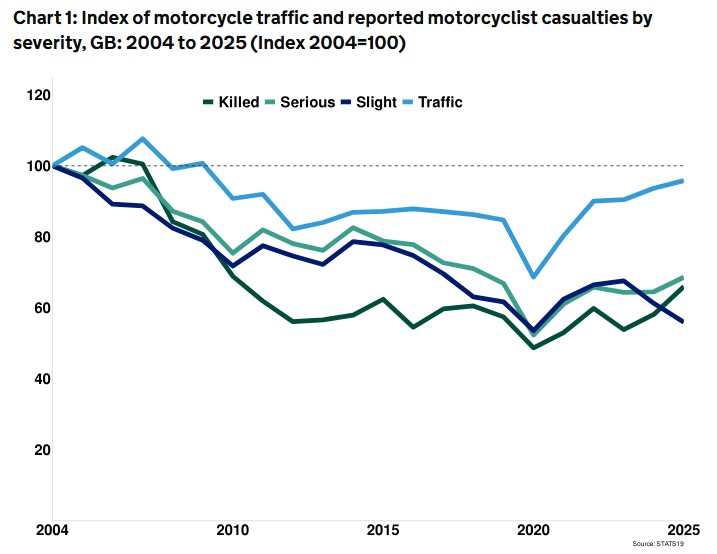
The UK Government has published the 2025 reported road casualty statistics for Great Britain. The figures show a mixed picture for motorcyclists: fatalities increased, while reported serious and slight injuries continued to fall.
In 2025, 386 motorcyclists were killed in reported road collisions in GB, compared with 340 in 2024. This represents a 14% increase and continues a recent period in which motorcycle fatalities have fluctuated around an average of around 7 deaths per week. Motorcycle traffic increased by 2% over the same reporting period.
There is, however, important wider context: reported serious injuries fell to 5,710 and slight injuries to 9,351 in 2025. These figures are among the lowest recorded outside the period affected by the Covid pandemic. This does not reduce the significance of the fatality increase, but it does show why the latest data should be read carefully and in full.
Where the risks remain highest
The motorcyclist factsheet highlights why riders remain one of the most vulnerable road user groups. Over the 2021 to 2025 period, 70% of motorcycle fatalities occurred on rural roads and in collisions involving other vehicles, 37% involved a two-vehicle collision between a motorcycle and a car, and ineffective observation was the most common road safety factor recorded in fatal or serious collisions involving motorcycles and another vehicle.
These findings reinforce the importance of maintaining good conspicuity, anticipating the actions of other road users and developing defensive riding skills. Wearing the appropriate personal protective clothing, including the right helmet, is a key factor in riding responsibly. Choose a legal helmet that fits correctly and use SHARP ratings to compare the safety performance of helmets, expressed as a simple star rating.
Why helmet choice still matters
Although the casualty figures do not, by themselves, provide evidence that changes in casualty outcomes are caused by helmet standards or helmet choice, helmet fit and helmet safety performance remain critical factors in reducing the risk and severity of head injury.
The newest update to the helmet safety standard UNECE Regulation 22 (R22.06) introduced more demanding test requirements designed to better reflect real-world crash scenarios. SHARP continues to provide independent comparative safety ratings above this minimum legal standard in the UK.
International evidence also reinforces the importance of safe, quality helmets. The World Health Organization (WHO) reports that correct helmet use can reduce the risk of death in a road crash by over six times and reduce the risk of brain injury by up to 74%.
For riders, the practical message remains simple: wear a legal helmet, make sure it fits correctly, and choose the safest suitable helmet you can.
Three checks before your next ride
· Check that your helmet is legal for road use in the UK and has a relevant approval marking.
· Make sure the helmet fits securely and comfortably before you buy or continue using it.
· Use the SHARP star rating to compare the safety performance of popular helmets that already meet the legal standard.
If you are replacing your helmet, start by finding a helmet that fits securely and feels comfortable. Then use the SHARP rating to compare the safety performance of suitable helmets and make the safest possible choice for your riding needs and budget.
Read a summary of the statistics in the DfT motorcyclist casualty factsheet: Motorcyclist Factsheet 2025